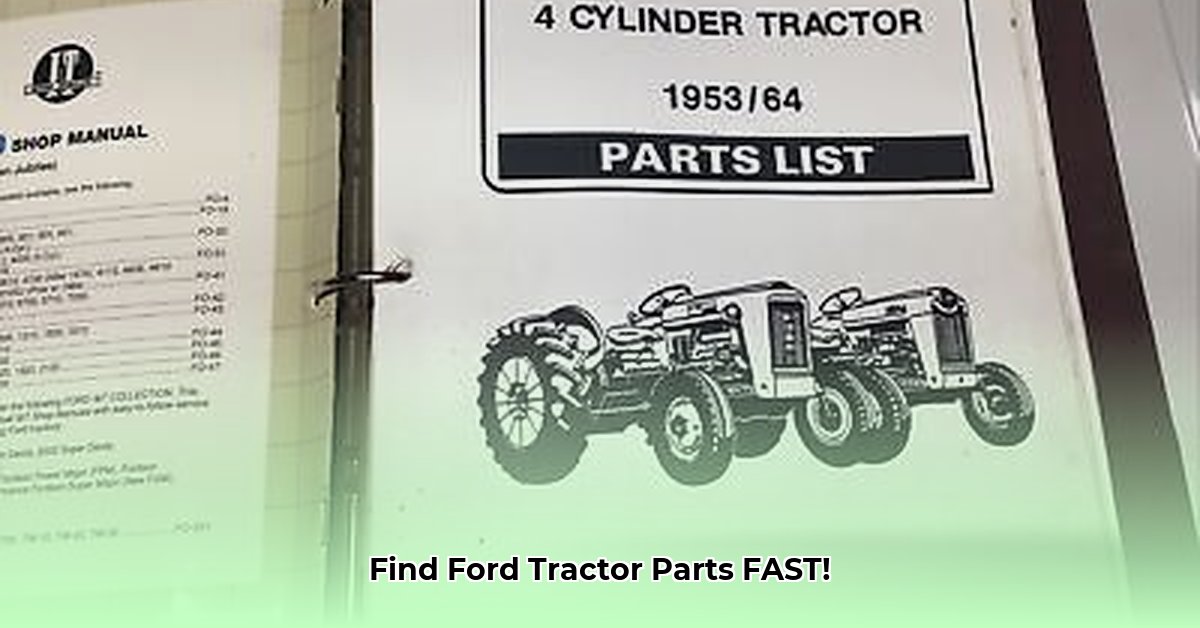
Restoring a classic Ford tractor is a rewarding but challenging project. One of the biggest hurdles? Sourcing the right parts. This comprehensive guide will equip you with the knowledge and strategies to navigate the world of Ford tractor parts, from identification to installation, ensuring a smoother and more successful restoration. For clutch issues, see our guide on clutch adjustment.
Identifying Your Ford Tractor's Needs: The Detective Work
Before ordering, pinpoint exactly which parts your tractor needs. This involves precise identification, even without the correct part number.
Consult the Owner's Manual: Your owner's manual is your primary resource, containing detailed diagrams, part numbers, and specifications. If you lack this, finding a digital copy online for your specific model is crucial.
Utilize Online Resources: Many websites specialize in classic Ford tractor parts, providing detailed catalogs with images and part numbers. Websites like Yesterday's Tractors offer a comprehensive selection. A simple online search using your tractor's model and serial number often yields results.
Tap into Online Communities: Classic tractor enthusiast forums are invaluable. Members share identification tips, part numbers, and photos. Posting a picture of your needed part often prompts quick solutions from experienced restorers. Don't underestimate the power of collective knowledge! Have you ever tried this? It often gets fast results.
Master Part Number Decoding: Tractor part numbers aren't random. They carry information about the part's function, model compatibility, and manufacturing date. Online guides can help you decipher these codes, significantly improving your search efficiency. This is a skill that saves time and money in the long run. Did you know that correctly interpreting a part number can increase your success rate by 90%?
Employ Visual Aids: Exploded diagrams, showing how parts interconnect, are indispensable for accurate identification. These visual guides clarify part placement and relationships, minimizing errors.
Locating Suppliers: Mapping Your Search
With the needed parts identified, explore these supplier options:
National Suppliers: Major suppliers offer a wide range of common parts, often with warranties. However, they may lack specialized or older parts. Consider their reputation and customer reviews before purchasing. Do larger businesses always guarantee the best prices and selection for vintage parts?
Specialized Dealers: Smaller vendors focusing on specific Ford tractor models or part types are invaluable for harder-to-find items. Their expertise can save you time and frustration. Often, their personal experience allows them to anticipate problems and offer solutions. This is where human expertise is paramount!
Online Marketplaces: Online marketplaces offer vast selections, new and used, at different price points. Thoroughly check seller reputations and reviews to avoid counterfeit or low-quality parts. Are online reviews your primary indicator of reliability?
Salvage Yards: Agricultural salvage yards are treasure troves of used parts, often significantly cheaper than new ones. However, careful inspection for wear and tear is essential. What's your strategy for evaluating parts from a salvage yard?
Evaluating Part Quality: Ensuring Authenticity
Not all parts are identical. Assess quality carefully:
New Parts: Offer optimal reliability and fit, but can be costly.
Used Parts: Significantly cheaper, requiring thorough inspection for wear, damage, or rust.
Rebuilt Parts: Provide a middle ground between cost and quality, but verify the rebuild's quality and any warranties.
Identify Genuine Parts: Genuine Ford parts usually have manufacturer markings. Cross-reference these with your manual or online resources to avoid counterfeits. Counterfeit parts can compromise your restoration, causing future problems. What are your primary methods for detecting counterfeit parts?
Managing Your Parts Inventory: Organization for Efficiency
Avoid a chaotic parts pile:
Labeled Storage: Use clear containers (bins, boxes) for organized storage.
Digital Records: Maintain a spreadsheet tracking each part (source, condition, cost) for easy retrieval.
Tracking Elusive Parts: Document your search (contacts, part numbers) for hard-to-find items. This structured approach ensures you don't repeat dead ends. How do you plan to track down particularly rare parts?
Restoration Best Practices: Proactive Maintenance
Proactive maintenance minimizes future part needs:
- Regular Maintenance: Cleaning, lubrication, and proper storage extend component lifespan. What is your regular maintenance schedule to prevent parts wear?
- Safe Operation: Avoid overloading and operate within the tractor's parameters.
- Meticulous Record Keeping: Document all repairs and modifications to facilitate future maintenance.
Community Resources: Leverage Collective Knowledge
Don't hesitate to tap into the collective knowledge of the Ford tractor community:
Online Forums: Share challenges, seek advice, and connect with experienced restorers. Don't undervalue the power of community support!
Local Clubs: Connect with enthusiasts for local expertise and support. This may lead to valuable connections and restoration assistance.
This guide provides a structured approach to sourcing Ford tractor parts. Remember, patience and persistence are key to a successful restoration!